
Solve Your Strategic Blind Spots
THE BOOK
A practical guide to seeing what your strategy depends on before the work begins.
If strategy feels clear in the meeting but messy in execution, Simple Strategic Planning helps you gather the missing pieces, connect them, and turn planning into progress that holds.
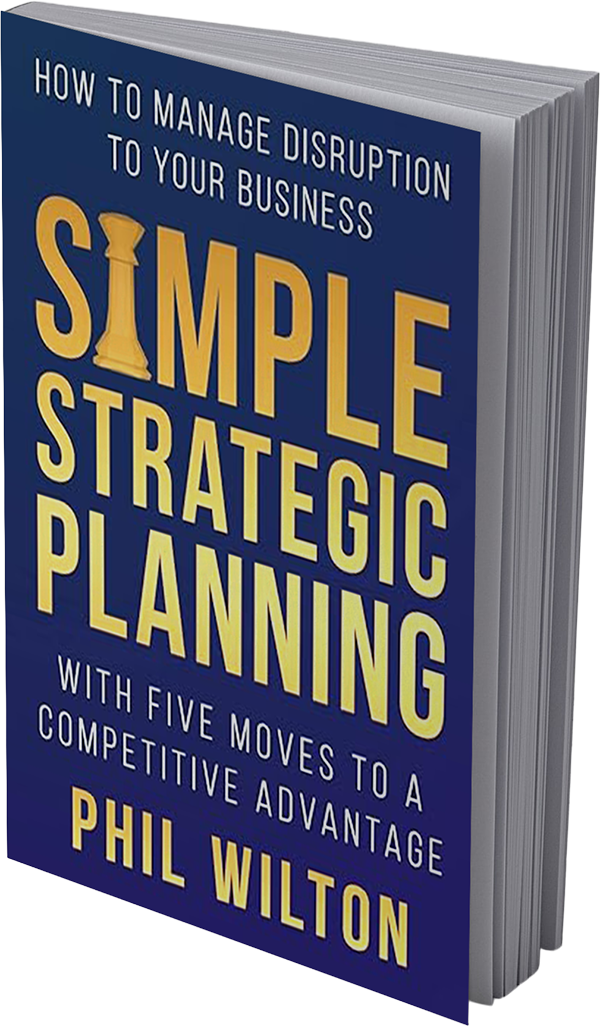
If strategy feels clear in the meeting but messy in execution, this book was written for that moment.
“
This book has changed the way I approach strategic planning.
Winifred M. deLoayza, Ed.D. • East West Leadership Planning
WHY IT MATTERS
Most organizations don’t have a strategy problem. They have an incomplete-picture problem.
Most organizations believe they have a strategy. What they often have is a plan built on partial information.
When key realities stay uncollected or disconnected, priorities drift, alignment fades, and the same problems reappear under new names.
WHO IT’S FOR
For leaders and teams who need strategy to survive contact with reality.
Simple Strategic Planning is designed for people who want a grounded way to understand their position, their capabilities, and the forces shaping competition before making high-stakes decisions.
Organizations planning a pivot
Teams strengthening competitiveness
Leaders making high-stakes decisions
Managers turning good plans into progress that holds
THE PROMISE
See what your strategy depends on.
The book helps you gather the right internal and external information, organize it into proven frameworks, and connect it into one usable picture.
01
Your position
Get clearer about where the organization actually stands before deciding where it should go.
02
Your capabilities
Name the resources, strengths, constraints, and realities that shape what is possible.
03
Your environment
Understand the external forces, competitive pressures, and changing conditions around the plan.
INSIDE THE BOOK
What you’ll do in the book
You’ll work through structured moves that turn scattered information into a clearer strategic picture.
1
Gather the missing pieces
Collect the internal and external data your strategy needs before decisions harden into commitments.
2
Use proven templates
Place what you learn into the Tri-Matrix framework — covering a SWOT, the Resource-Based View (RBV), and Five Forces.
3
Connect it into one view
Turn your disconnected data into a usable picture that makes developing a coherent strategic plan far easier than you could imagine.
What Readers Are Saying
“A clear path to follow when the tunnel of entrepreneurship looked long and desolate.”
— Oscar O.“Easy to digest — and easy to put into action.”
— Lisa J.“A well-thought-out, detailed guide to developing a meaningful, well-founded strategic plan.”
— Dana D.“Fresh, thought-provoking, and opportunity-revealing.”
— Jan O.“A fresh approach to strategic planning that brings new insight to building a real plan.”
— Edward C.
ABOUT THE AUTHOR
Phil Wilton helps leaders see what’s shaping their decisions.
Phil’s work is built from lived experience inside complex global organizations. He uses his Tri-Matrix framework and careful listening to surface what’s missing, connect what’s already known, and translate it into strategy that holds.
Simple Strategic Planning gives readers a practical way into that work: clearer inputs, stronger conversations, and a better view of the conditions around the plan.
Author of Simple Strategic Planning
MBA in International Business
Former executive with global business experience
Creator of the Tri-Matrix framework
Strategic training from Cornell & Harvard
Strategist, speaker, facilitator & advisor
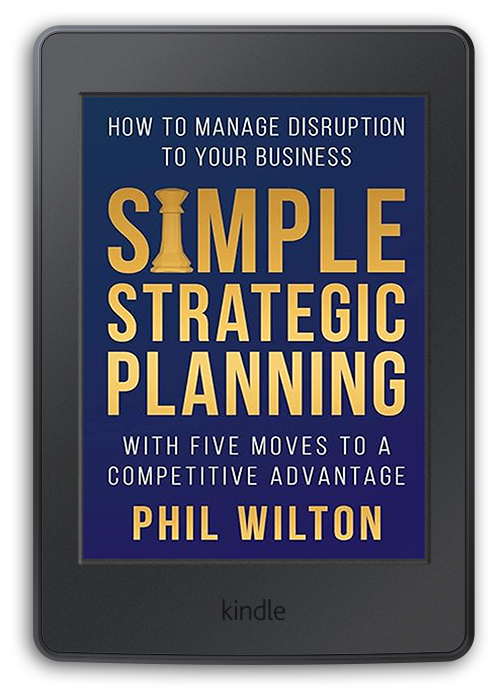
BUY THE BOOK
Start with a clearer picture.
Simple Strategic Planning helps you see what your strategy depends on, so decisions can become clearer, simpler, and easier to act on.